As the highest court of law in Bangladesh, the Supreme Court of Bangladesh is the most important court. Part VI Chapter I (article 94) of the Constitution of Bangladesh, which was approved in 1972, is responsible for the establishment of this Supreme court, which is organized into two divisions: the High Court Division and the Appellate Division.
Additionally, this is the office of the Chief Justice of Bangladesh, as well as the Appellate Division Justices and the High Court Division Justices. For the period beginning in January 2024, the Appellate Division has a total of six justices, while the High Court Division has a total of 89 justices, of whom 78 are permanent and 11 are supplemental.
There are two divisions that make up the Supreme Court of Bangladesh. These divisions are the Appellate Division and the High Court Division. In addition to hearing appeals from subordinate Supreme courts and tribunals, the High Court Division also has original jurisdiction in certain restricted situations. These cases include writ petitions filed in accordance with Article 101 of the Constitution of Bangladesh, as well as concerns pertaining to companies and admiralty businesses.
According to article 103 of the constitution of Bangladesh, the Appellate Division is the one that has the authority to consider appeals from the High Court Division.Because it is not affiliated with the executive branch, the Supreme Court has the authority to decide against the government in matters that are considered to be politically contentious.
A obligatory conversation with the Prime Minister is required prior to the appointment of the Chief Justice of Bangladesh and other justices of the Supreme Court. The President of Bangladesh is the one who makes these appointments.[5] The position of Additional Judge is the entrance point to the seat of judges in the High Court Division. Candidates for this position are appointed from the practicing Advocates of the Supreme Court Bar Association and from the judicial service in accordance with the provisions of Article 98 of the constitution for a term of two years.
Currently, the percentage of such appointments is between 80 and 20 percent. In accordance with the provisions of Article 95 of the Constitution, an Additional Judge is appointed to a permanent position by the President of Bangladesh after the successful completion of this time and after taking into consideration the suggestion made by the Chief Justice. In accordance with the same law, the President of Bangladesh is also responsible for the appointment of the judges who serve on the Appellate Division. According to the provisions of Article 148 of the Constitution, all of these appointments begin to take effect on and from the day that the appointee takes an oath.
According to the provision of article 95 of the Constitution (Thirteenth) Amendment Act, 2004 (Act 14 of 2004), a judge of the Bangladesh Supreme Court is allowed to continue serving in their position until they reach the age of 67 years. A retired judge is unable to argue or act before any court or authority, or to occupy any position of profit in the service of the country, provided that the post in question is neither a judicial or quasi-judicial one, or the office of the Chief Adviser or Adviser.
The High Court Division has undergone recent reforms
Significant changes have been made to the High Court Division in order to conform to the ever-evolving requirements of society and the problems posed by the legal system. All residents will have equal access to justice as a result of these changes, which seek to simplify Supreme court procedures, improve efficiency, and accomplish these goals.
Ensuring the Transparency and Accountability of the Judicial System
The foundations of a legal system that is fair and just are accountability and transparency from the very beginning. The High Court Division is dedicated to safeguarding these ideals by implementing strong supervision measures and conducting procedures in an open and transparent manner.
Facilitating Access to Legal Representation for Citizens
It is essential to have access to legal assistance in order to guarantee that all persons, regardless of their socioeconomic standing, are able to make use of legal action. As a means of enabling disadvantaged populations to pursue justice, the High Court Division is at the forefront of projects that aim to give free or subsidized legal help to vulnerable communities.
Resolving Historic Cases of Supreme Court
The High Court Division is responsible for deciding matters that are of national importance and often establishes legal precedents that have an impact on the jurisprudence of the country. The court’s decisions have far-reaching repercussions for governance and human rights, ranging from decisions regarding constitutional issues to lawsuits involving public interest.
Technology’s Place in Judicial Proceedings
The High Court Division has embraced technology in order to get judicial cases completed more quickly and to improve access to justice in a society that is becoming more digital. The court process has been changed by the introduction of electronic filing systems, virtual hearings, and online case management platforms, which have significantly improved its efficiency and accessibility.
Opportunities and Difficulties Ahead
The High Court Division is confronted with a multitude of obstacles, including a backlog of cases, limited resources, and complicated procedures, despite the fact that it has made admirable efforts. The judicial system is being driven toward greater efficiency and effectiveness as a result of these problems, which also bring potential for innovation and change.
Conclusion
Ultimately, the High Court Division of the Supreme Court of Bangladesh serves as a stronghold of justice, ensuring that the rule of law is upheld and protecting the rights of the people. In order to continue adapting to the ever-evolving requirements of society, it has recently implemented changes, and it has made a commitment to transparency and has embraced technology.
সিভিল প্রসিডিউর রুলস ( সিপিআর ) 1997 সালে সিভিল প্রসিডিউর অ্যাক্ট 1997 অনুসারে দ্বারা প্রবর্তিত হয়েছিল এবং এটি , হাইকোর্ট অফ জাস্টিস এবং ডিসকাউন্ট দ্বারা নিয়ম । ওয়েলসে দেওয়ানী এবং আলোচনা । এ 26 এপ্রিল 1999 এর পর শুরু সমস্ত আলোচনার ক্ষেত্রে প্রযোজ্য এবং ন্যায়নিষ্ঠ নিয়ম নীতির নিয়ম এবং নিয়মের নিয়মকে প্রতিস্থাপন করে৷ সিভিল প্রসিডিউর রুলস 1998 হল নিয়মগুলি একটি সংবিধিবদ্ধ উপকরণ।
সিপি নন-আইনদের জন্য আইনী কার্যক্রমকে, দ্রুত এবং সহজে দ্রুততার মাধ্যমে ন্যায়বিচারের উন্নত উন্নত করার জন্য ডিজাইন করা হয়েছে। এর ফলশ্রুতিতে, অনেক প্রাচীন উদাহরণ পদকে সরল ইংরেজি সমতুল্য দিয়ে প্রতিস্থাপিত করা হয়েছিল, যেমন “বাদী” এর জন্য “দাবীদার” এবং “সাবপোনা” এর জন্য “সাক্ষী সমন”।
পূর্ববর্তী নিয়মের বিপরীতে, সিপিআর তাদের “ওভাররাইডিং উদ্দেশ্য” এর একটি বিবৃতি দিয়ে শুরু করা হয়, উভয়ই সুনির্দিষ্ট নীতির প্রয়োগে সহায়তা করতে এবং যেখানে কোনো নির্দিষ্ট নিয়ম প্রযোজ্য নয় এমন আচরণ নির্দেশিত।
মামলা দায়ের – দেওয়ানী মামলার বিভিন্ন পর্যায়
দেওয়ানী প্রশ্নর প্রক্রিয়া শুরু হয় এখতিয়ারভুক্ত আদালতের সেরেস্তাদারের সামনে আরজি দাখিল মাধ্যমে। আরজীর সাথে যোগ করা সকল চিঠিপত্র দাখিল করতে হবে। এর সাথে ডাক টিকেট সমন-নোটিশ ও সমাধান ফিখি দাল করতে হবে। সংক্ষেপে গণনামাঙ্ক ফাইলিং হলে সেরেস্তাদার রিপোর্টিং ফাইলিং রেস্ট্রারে কোডার পার্টির নাম, সমর ধরন, গুটিকর কোড ইত্যাদি লিপিবদ্ধ করবে।
সমন জারি
বলবেন যেভাবে প্রশ্ন করা হলে সবাইকে বিবাদীর উপর সমন্বিত করবে। আদালত থেকে সকল বিবাদীর সমন্বিত জারি করার দেশকে তার বিরুদ্ধে একটি প্রশ্ন উল্লিখিত হয়েছে সে সম্পর্কে তাকে অবহিত করা হয়েছে, নির্দিষ্ট করে আদালতে স্বপক্ষে উপস্থিত হওয়া এবং তার পক্ষকে দাখিল করার জন্য নিদ্রা প্রদান করা হয়েছে। আদালত থেকে সমন্বিত জারীকারক নিজে সমন্বিত একটি কপি বিবাদীকে প্রদান করবেন এবং একটি সমন্বিত বিপরীত প্রতিক্রিয়া যা সমনজারী হয়েছে এছাড়াও ভিন্ন ভিন্নভাবে বিবাদীর সমন জারি করতে পারে।
বিকল্পভাবে বিরোধ নিষ্পত্তি (ADR) :
বিবাদী তার স্বামী দাখিল পরের পক্ষের আইনজীবী আদালতে উপস্থিত থাকেন তাহলে আদালতে মামালার শুনানি মুলতবী করে ১৯০৮ সালে দেওয়ানীর কার্যবিধির ৮৯ বা ৮৯খ ধারার সদস্যদের মধ্যে বিরোধিতাকারীর জন্য বিচারক বাহিরে মধ্যতার মাধ্যমে সমাধানের চেষ্টা করবেন।
ইসু বা বিচার্য বিষয় নির্ধারন
উভয় পক্ষের আদালতের বাহিরে মধ্যতার মাধ্যমে তাদের বিরোধিতা করতে ব্যর্থ হন তাহলে উত্তরের পরবর্তী কার্যক্রম শুরু হবে। ইস্যু গঠন বা বিচার্য বিষয়ের উপর মোকদ্দমাটির বিচার তা নির্ধারণ করা হবে। ১৯০৮- আইএস দেওয়ানী কার্যবিধির আদেশ, নিয়ম-১ অনুযায়ী প্রশ্নর প্রথম তারিখ শুনলে বা ব্যক্তিগত দাখিলের মধ্যে যে পরবর্তী সক্রিয় থেকে ১৫ এর মধ্যে গঠন করতে হবে।
ধারা 30 এ ব্যবস্থা
আদালত যে কোন সময় স্বতঃ প্রবৃত্ত হওয়া অথবা কোন পক্ষের আবেদনের জন্য অনুরোধ- প্রশ্নাবলী সরবরাহ ও তথ্যদান, দলিল ও গ্রহন এবং সাক্ষ্য হিসাবে দাখিল যোগ্য দলিল বা অন্য কোন পথ, পরিদর্শন, দাখিল বা ফেরৎ সম্পর্কে অনুরোধ জানাতে পারেন। আমরা যার স্বাক্ষ্য প্রদর্শনের জন্য বা উপরোক্ত দলিলাদির নির্দেশ দিতে তার উপস্থিতি প্রয়োজন তার প্রতি আদালতে সমন করতে পারেন এবং কোন হলফনামা যোগ করতে পারেন।
চূড়ান্ত শুনানির জন্য তারিখ নির্ধারণ (SD)
৩০ ধারার পদক্ষেপ এর পর আদালত মামলার চুড়ান্ত শুনানীর জন্য তারিখ নির্ধারণ করবেন। দেওয়ানী কার্যবিধি- ১৯০৮ এর আদেশ -১৪ বিধি ৮ অনুযায়ী ইস্যু গঠনের ১২০ দিনের মধ্যে মামলার চূড়ান্ত শুনানীর দিন ধার্য করতে হয়। পক্ষদ্বয়কে তাদের নিজ নিজ পক্ষে মামলা প্রমানের জন্য সাক্ষীর তালিকা না দিয়ে থাকলে তাহলে আদালত সাক্ষীদের তালিকা দিতে বলবেন ।
চূড়ান্ত শুনানি (PH)
এ পর্যায়ে উভয় পক্ষের সাক্ষীদের জবানবন্দি রেকর্ড করবেন আদালত। এক পক্ষের সাক্ষীকে অন্য পক্ষের নিযুক্ত কৌঁসুলির দ্বারা জেরা করা হবে এবং আদালত কর্তৃক রেকর্ড করা হবে। কোনো ধরনের দালিলিক প্রমাণ থাকলে তা আদালতে পেশ করবে দলগুলো
অধিকতর শুনানী বা (FPH)
1908 সালের সিভিল প্রসিডিউর কোড- অর্ডার-18-এর 19 নং বিধি অনুযায়ী, চূড়ান্ত শুনানির তারিখ থেকে 120 দিনের মধ্যে মামলার শুনানি শেষ করতে হবে। আদালত প্রথম দিনেই মামলার সব সাক্ষীর জবানবন্দি রেকর্ড করতে ব্যর্থ হলে তাকে বলা হয় এফপিএইচ।
যুক্তি
মামলার শুনানি শেষে উভয় পক্ষের সাক্ষীদের সাক্ষ্যগ্রহণ শেষে বাদী-আসামিপক্ষের নিযুক্ত আইনজীবী আদালতে তাদের পক্ষে যুক্তিতর্ক উপস্থাপন করবেন। মামলার শুরু থেকে শেষ পর্যন্ত সব বিষয় সংক্ষিপ্তভাবে আদালতের সামনে উপস্থাপন করা হবে। যুক্তি অবশ্যই পরিষ্কার এবং বৈধ হতে হবে। যুক্তিতর্ক শেষে রায় ঘোষণার দিন ধার্য করবে আদালত।
রায় ঘোষণা
সাধারণত যুক্তিতর্ক শুনানির পর একটি নির্দিষ্ট তারিখে আদালত মামলার রায় ঘোষণা করবেন। সিভিল প্রসিডিউর কোড- অর্ডার-২০ অফ 1908-এর বিধি 1 অনুসারে, মামলার শুনানি শেষ হওয়ার 7 দিনের মধ্যে রায় ঘোষণা করতে আদালতকে বলা হয়েছে। রায়ে পক্ষের জবানবন্দির সারসংক্ষেপ, বাদী-বিবাদীর সাক্ষীদের জেরা, জবানবন্দি বিশ্লেষণ, বিচারের বিষয়, সিদ্ধান্তের বিষয়ে যৌক্তিক আলোচনা, চূড়ান্ত আদেশ ইত্যাদি লিপিবদ্ধ করা হবে। একটানা উপায়ে।
Cheque Dishounor and Legal Remedies in Bangladesh in 2024 and how to deal with it
Cheque dishonor is a recognized crime in Bangladesh. Checks are increasingly being employed as a means of financial transaction between businesses and people. As a result, cheque dishonour or bounce is a prevalent problem these days. As a result, the recipient of the cheque must have an effective and adequate remedy.Bangladesh has a statute called the Negotiable Instruments Act of 1881, which addresses several remedies and topics regarding cheque dishonor. Section 138 of this Act allows you to register a complaint about cheque dishonor.
What is Negotiable Instrument?
A negotiable instrument is any document that guarantees the payment of money, whether on demand or at a future date.
Types of Negotiable Instrument
Promissory Note:
A promissory note is a written instrument signed by the maker that contains an unconditional pledge to pay a specified sum of money to a specific person or the bearer of the instrument at a defined or determinable future period or upon demand. The term “on demand” refers to a note that is payable immediately or upon sight.
Bill of Exchange:
A written document signed by the maker that contains an unconditional order directing a certain individual to pay money to a specific person or the bearer of the instrument at a set or determinable time or on demand. Such instrument must contain an order to accept or pay, and the acceptor must accept the direction/order; otherwise, the instrument is not a bill of trade.
Cheque
A bill of exchange drawn on a specified banker and is payable only on demand; it is given for immediate payment.
Definition of Cheque ?
Section 6 of the Negotiable Instruments Act, 1881 defines the term “cheque” as follows: A “cheque” is a bill of exchange drawn on a specific banker that is not stated to be payable other than on demand.
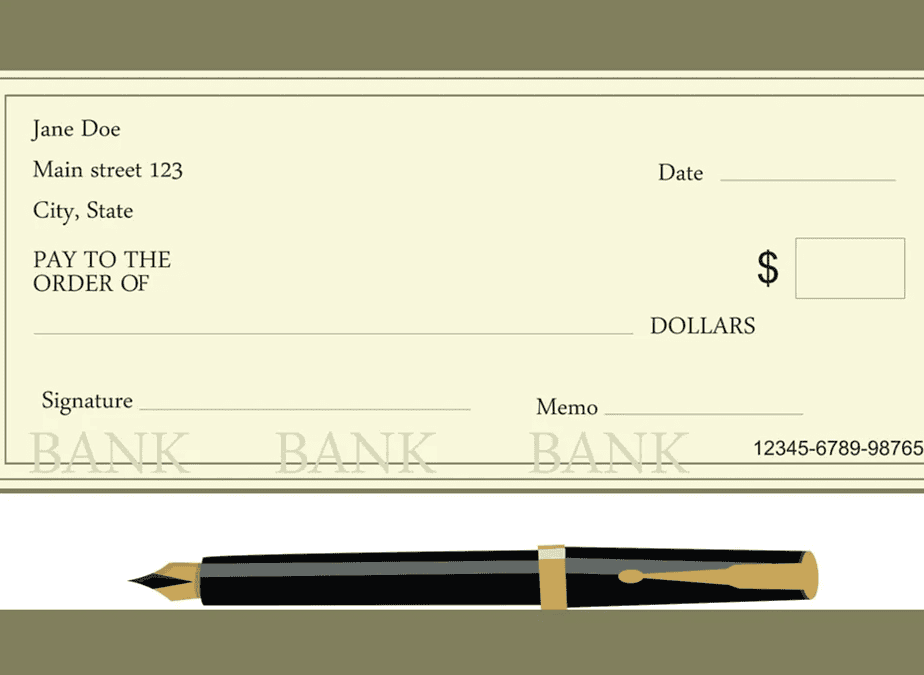
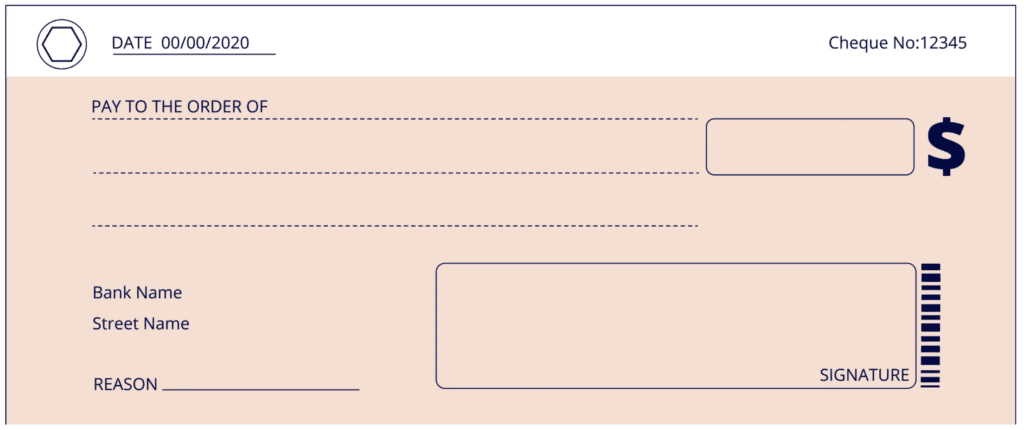
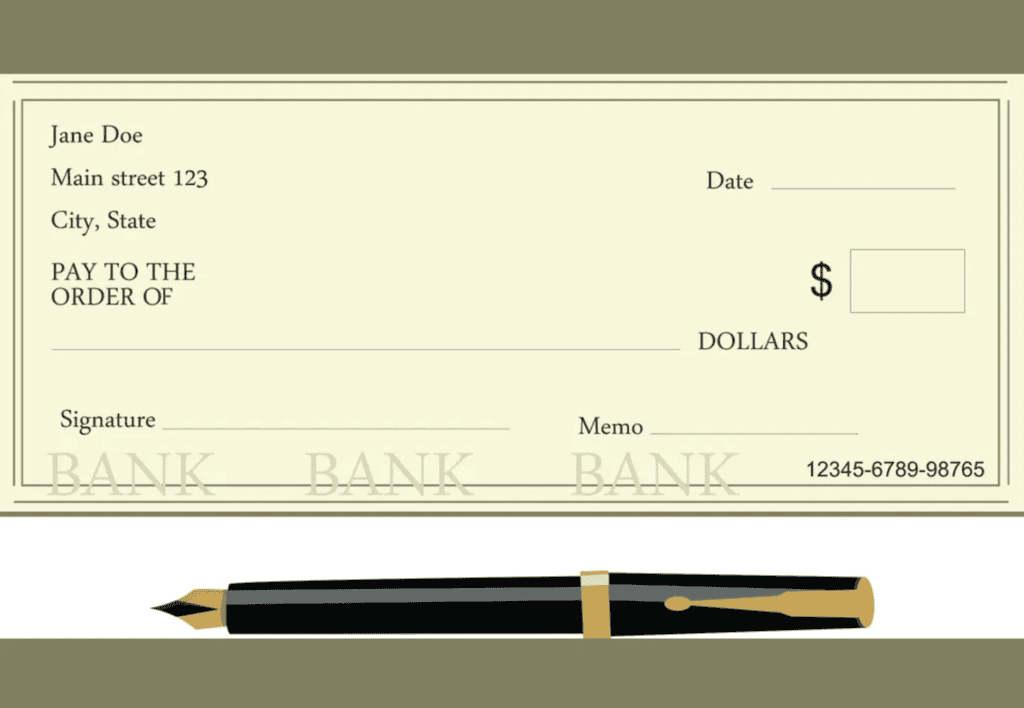
A cheque is a written order or request issued to a bank or persons engaged in the banking industry by a party in possession of money, requesting that they pay a specific sum of money to a person therein named, or bearer, or to such person or order, upon presentation.
Kinds of Cheque
Cash/Bearer Cheque
Account Payee Cheque
Contents of a Chque
Date of Issue
Name of the Recipient
Amount in Numerical and Words
Signature of the Payee
Advantages of Making a Payment via Cheque:
• More convenient than carrying cash around • Payments can be stopped if necessary • A safer means of making payment if cheques are crossed • It eliminates the risk of making counting mistakes as in the case of cash notes • Can be posted more cheaply • Can be traced if lost and can also be post-dated
DISADVANTAGES OF CHEQUE
• Cheques are not legal tender, and other creditors may refuse to accept them. • They are worthless if the drawer does not have cash in his/her account. • They are not appropriate for small amounts. • People without bank accounts may have difficulties if the cheque is crossed. Bank charges are levied on checkbooks and dishonoured cheques.
Cheque Dishonour
To Dishonour a cheque means is to refuse or neglect to pay it at maturity.
Alterations in date/figures/words require drawer’s full signature
Clearing stamp required/requires cancellation/endorsement of the Bank
Addition to Bank discharge should be authenticated
Cheque crossed Account Payee only
Collecting Bank’s Discharge irregular/required
Not drawn on us
Mutilated Cheque
Account Closed
Refer to Drawer
Legal Framework for Cheque Dishonour
Offences pertaining to cheque dishonor or cheque bounce are handled with in accordance with the provisions of the Negotiable Instruments (N.I) Act 1881. This Act applies to the whole of Bangladesh. The Act is considered a special law, and its provisions have precedence over any ordinary law.
Relevant law for Dishonour of Cheques
What actions can be taken for Cheque Dishonour?
In the event that a cheque is dishonored, the drawee may initiate a complaint against the drawer. The plaintiff must determine where to bring a case for cheque dishonor. The case must be filed at a Cognizance Magistrate Court. The bank branch where the disputed cheque was submitted must be within the Court’s jurisdiction.
Steps to be take for filing a Case under 138 of NI Act
The conditions that must be followed in order to file a case for cheque dishonour under section 138 and 140 of the N.I Act are discussed below:
Step One:
Present the cheque to the bank within 6 months after issuance or validity. Furthermore, it can be presented to the bank as many times as the drawer directs the payee to.
Step Two:
Within 30 days of the cheque being returned/dishonoured, send a written notification to the drawer demanding payment.
Step Three:
The drawer has 30 days from the date of notice to pay.
Step Four:
If the drawer does not pay within the specified time frame, the drawee must file a case within 30 days after the expiration of the payment deadline.
Claim against Companies for Dishonour of Cheque
If a company commits an offence under section 138, the company, as well as any person who was in control or responsible to the company at the time of the offence, is liable for the offence under section 140 of the N.I Act.
Any person must not be held accountable under section 140 if he can demonstrate that he had no knowledge of the offence being committed or that he took all reasonable precautions to avoid it from being committed.
For a claim against a company, serving a notice of dishonour on the firm is sufficient; there is no need to serve notice on all partners involved in the commission of the offense.
Essential papers you need to initiate a case against a dishonoured cheque in Bangladesh
Postal receipt and acknowledgment letter of legal notice
Copy of newspaper where legal notice is published, if any
Authorization letter or power of attorney if ‘Authorized Agent’ files the case
List of witnesses
Costs of the case such as Court fee, lawyer’s fee etc.
Government or private legal aid if unable to bear the costs of the case
Intention to go for settlement with the offender to get the money
Punishment for Cheque Dishonour
The punishment for the offence under the Negotiable Act of 1881 is imprisonment for up to a year, a fine of up to three times the value of the cheque, or both.
Appeal
The penalty imposed by the court can be appealed. At least 50% of the amount stated in the cheque shall be given to the court that issued the penalty and appeal.
What happens when the drawer of the cheque dies?
Drawer dies in the N.I case:
The case ends with the accused’s death, and the complainant’s only option is to initiate a civil complaint against the accused’s legal heirs. This is because the case under Section 138 of the N.I Act is criminal in character, and criminal obligation cannot be transferred to the accused’s legal successors.
Drawer dies in the appeal case:
If the drawer of the cheque dies while the appeal case is pending, the appeal (with the exception of an appeal from a fine penalty) will be dismissed. The complainant must pursue a civil court proceeding to recover money under a fine sentence against the deceased accused’s lawful heirs.
Alternative treatments are possible when the check is outdated:
If a cheque is not given to the bank and dishonoured within the time frame allowed in the legislation, it becomes outdated. When a cheque becomes out of date and you are unable to initiate a complaint under the Negotiable Instruments Act of 1881, you have four other options for seeking relief.
The possessor in due course can take the following actions:
(i) Sections 406 and 420 allow holders to file cases for breach of trust and cheating.
(ii) Money Suit: The limitation period for a money suit is three years. As a result, even if the holder is unable to bring a case under the NI Act, he will be able to retrieve the money through a civil suit.
(iii) Summary Suit: According to Order 37 of the Code of Civil Procedure, cheques are negotiable instruments. As a result, in due time, the holder may file a summary suit before the district judge, which will be dismissed summarily. The limitation period for a summary lawsuit is also three years.
Can a loan guarantor be held accountable for the loanee’s dishonoured cheque?
When the bank approves the loan, one or more guarantors are required in addition to the borrower. It is a well-established legal principle that actions under Section 138 of the N.I Act cannot be taken against the guarantor for dishonoring a cheque issued by the loanee. However, he may be held civilly liable for the debt he guaranteed.If the borrower fails to repay the loan, the guarantor will cover the remaining balance. If the guarantor issues a cheque to make such payment, he is liable under section 138 if it is dishonoured when presented for encashment.
Arbitration and Cheque Dishonour
Arbitration clauses in agreements:
If any party to the arbitration institutes any legal proceeding against the other party on any matter agreed upon in the agreement, Section 7 of the Arbitration Act 2001 states that whatever the current law in force directs, it will be treated as a non-obstante clause, and the court will not have jurisdiction to hear any other legal proceedings other than those provided for in the Arbitration Act 2001.
Both the N.I Act and Arbitration Act 2001 are special laws. The N.I Act contains provisions for filing criminal cases for offences that fall under this Act. On the other hand, arbitration proceedings are considered as civil matters. Moreover, according to customary law, if any dispute arises between ordinary law and special law, unless stated otherwise the special law shall always prevails.
Contact TRW, which is considered the best law firm for NI Act and Cheque Dishonour law firm in Bangladesh:
Barrister Tahmidur Rahman and Barrister Mahbub, Advocate Wahid are considered as some of the best lawyers from Dhaka, Bangladesh according to domestic and international rankings. The law firm in Bangladesh is also one of the top law international firms in Dhaka and Chittagong. Feel free to hire the most famous lawyer in Bangladesh for your need through phone (+8801829737374 or +8801829737374) or through email: info@trfirm.com
Issue Management for IPO in Bangladesh: How to start a Public Issue
A Lead Manager at a commercial or investment bank is in charge of organizing a specific credit or bond issuance. This bank will recruit additional lending institutions or underwriters to form the syndicate, negotiate terms with the issuer, and monitor market conditions. The Lead Manager is also known as the Syndicate Manager, the managing underwriter, or the lead underwriter.
The lead manager negotiates with the borrower or issuer, evaluates market circumstances, and forms the syndicate that lends money or underwrites the issue. Also known as syndicate manager, managing underwriter, or lead underwriter. In a syndicate, an underwriting business reports directly to the managing underwriter. A syndicate is a group of underwriters who work together to place a new securities issuance with investors. Every syndicate is a temporary arrangement. The lead manager is allotted the second-largest portion of the new issue for placement. A lead manager is sometimes known as an arranger.
Issue Management and Underwriting
Issue management efforts are a crucial component of a merchant banking operations. As issue manager, a merchant Bank oversees the Initial Public Offering (IPO), right offers, and repeat issues of shares and debentures. It also allows an issuer to place shares with public/institutional investors prior to the IPO. Issue management activities include preparing prospectuses (for IPOs and repeat offerings) and right offer documents (for right offers), submitting them to the Bangladesh Securities and Exchange Commission, and receiving their approval. RIL also provides logistical and other help in the collection of money applications, the review of application forms, the formation of a lottery in the event of oversubscription, and the distribution of allocation letters and reimbursement warrants, where applicable.
Issue management refers to the administration of business securities that are regularly sold to the public and existing shareholders on a rights basis. Merchant bankers and top managers must manage issues effectively. In Bangladesh, merchant bankers with the necessary professional skills and expertise manage capital concerns. One of their responsibilities is to manage issues. Factors such as the massive growth in the number and scale of publicly traded firms, as well as the complexity that arises as a result of the ever-increasing BSEC standards, have all contributed to merchant bankers’ increasingly crucial position in recent years.
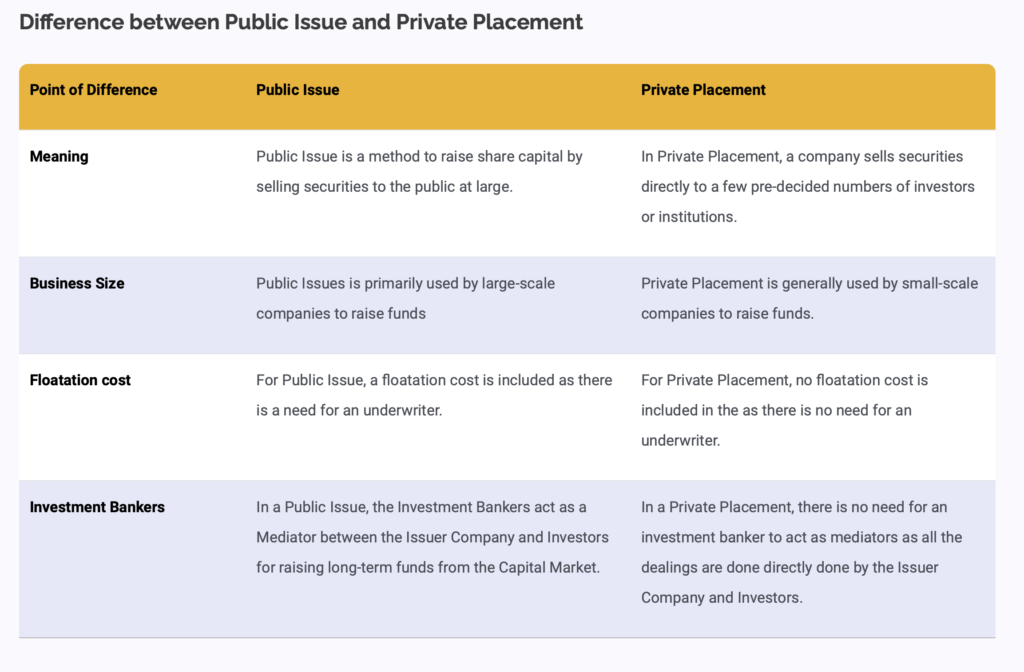
In Bangladesh, public issues are one of the most common methods of generating capital from a large number of investors. During this process, a firm distributes a prospectus to the general public, inviting them to purchase its shares by paying the share application money. It is a method of issuing convertible shares or securities in the primary market to entice new investors to subscribe.
The Sources of Fund Available to a Business in Bangladesh:
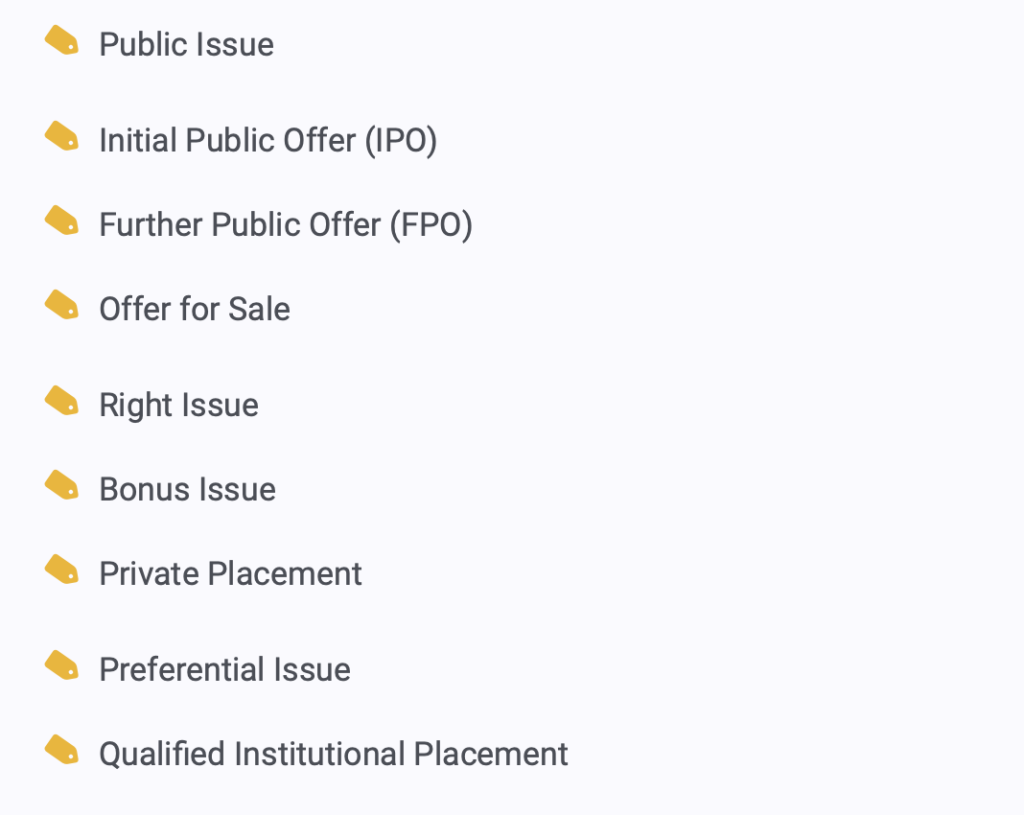
Initial Public Offering in Bangladesh:
For Unlisted Companies An unlisted company is a public corporation whose shares are not listed on a stock market or traded on any recognized stock exchange. It can also enter the primary market through an initial public offering. An initial public offering (IPO) is the first time an unlisted company offers its shares to the public.
As a result, the IPO process serves as a watershed moment for any unlisted firm, allowing them to raise cash through public subscriptions. However, this method is significantly riskier than a Further Public Offering because a company joins the market for the first time by releasing a prospectus.
Advantags of a Pu
Further Public Offer:
Further Public Offer for Listed Companies Further Public Offering occurs when a publicly traded firm makes a sale offer or issues new shares to the public in order to raise funds.
FPO refers to a firm that has previously been listed and has completed the IPO procedure and plans to issue shares to the general public. It is done to encourage future public investment. FPO is less riskier than an Initial Public Offering because investors are already aware of the company’s success and have a good understanding of its growth prospects.
Offer for Sale
Offer for Sale In collaboration with the BOD, shareholders may offer a portion of their holdings to the general public. The prospectus of a firm is referred to as its LOI. Furthermore, the Company’s shareholders refund any expenses incurred in connection with the offer. Consequently, any dividend paid or declared on these shares is paid to the transferee.
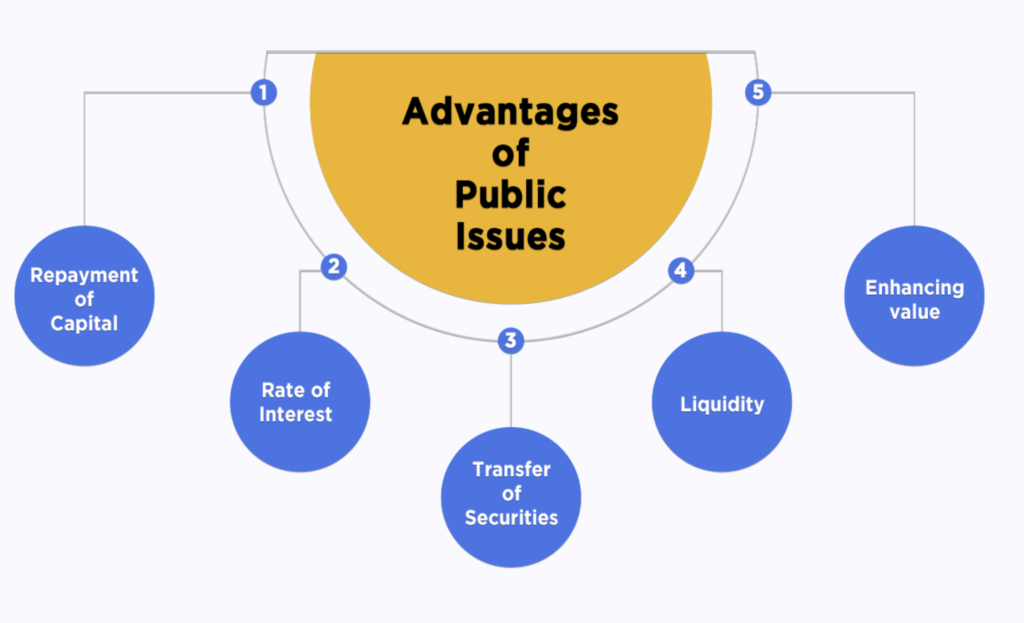
The advantages of Public Issues can be summarised as follows:
Repayment of Capital:
If a company raises capital through Public Issues, there is no need to repay the amount to the investors except when the company goes into the winding-up process.
Rate of Interest:
Unlike debentures, public issues do not provide any fixed rate of interest.
Transfer of Securities:
In comparison to debentures, the ownership of a shareholder is easily transferable in the case of public issues.
Liquidity:
As compared to any other form of securities, shares are more liquid as they can be converted into cash easily.
Enhancing value:
The goodwill of a company increases when it trades shares on a recognised stock exchange. It also increases the level of transparency and trust among the investors and the public.
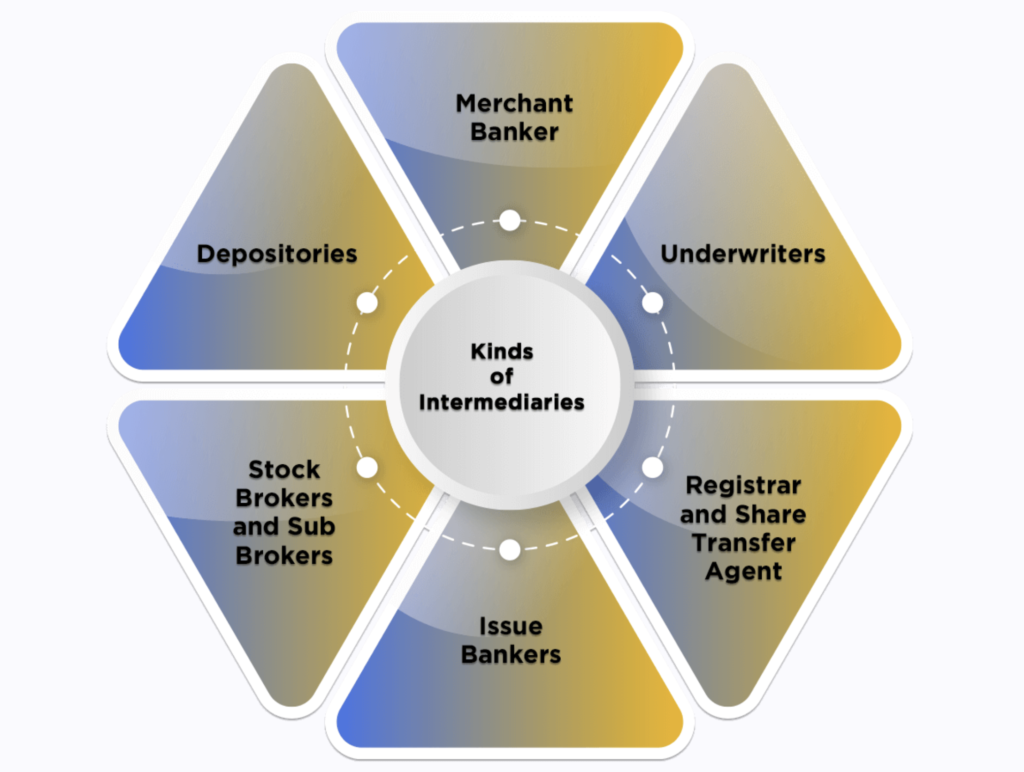
In Bangladesh, the many types of intermediates necessary with a valid proof can be classed into:
Merchant Banker
Merchant Bankers are the most important intermediates of all. They support a firm throughout the process, from creating a prospectus to listing its securities on a recognised stock exchange. Merchant bankers check and verify all of the information presented in the prospectus by conducting due diligence on all of the data. Following that, they issue a certificate to the Bangladesh Bank.
Underwriters
Underwriters must subscribe to a company’s unsubscribed shares. Underwriters come into play when shares are undersubscribed.
Registrar and Share Transfer Agent
The Registrar and the Share Transfer Agent determine the basis for allotment of shares received from the public. They are also in charge of sending out share certificates and refunds.
Issue Bankers
The Issue Banker receives all applications on behalf of the Issuer Company. These applications are subsequently submitted to the Registrar and Share Transfer Agent for further processing.
Stock Brokers and Sub-Brokers
The Issuer Company pays Stock Brokers and Sub Brokers a commission for urging the public to subscribe to its shares.
The Role of a Law Firm/Advisor in the IPO Process in Bangladesh:
The IPO process in Bangladesh is complex and highly regulated, necessitating meticulous law firm strategy and implementation. A law advisor or law company can play an important part in this process by providing the following services:
• A legal firm can provide thorough due diligence services to prepare a company for the IPO process. • A law advisor/firm can design and evaluate offering documentation, including prospectuses, to ensure compliance with securities legislation. • A law firm can advise on compliance with Indian securities rules and regulations, such as the BSEC guidelines. • A legal firm can help create the create Red Herring Prospectus (DRHP) in accordance with BSEC requirements. We provide a comprehensive range of services to help your firm through the IPO process, including DRHP drafting, securities legislation compliance, and offering document drafting. Our professional team of lawyers has vast experience in IPO-related law firm concerns and can provide tailored legal assistance to meet your company’s specific needs.
TRW Law Firm takes a collaborative approach to working with clients. We recognize that going public is a huge choice for your company, and we collaborate closely with you to ensure that your firm’s aims and interests are always prioritized. Our team takes the time to learn about your company and goals before providing specialized law firm services that meet your specific requirements.
Our dedication to offering superior law firm services has earned us a reputation as one of Bangladesh’s leading legal firms for IPO-related problems. With our help, your company may effectively navigate the IPO process and achieve its objectives. TRW Law Firm is proud to be one of Bangladesh’s leading law firms for IPO-related problems.
Our experienced lawyers have a thorough awareness of the legal and regulatory framework surrounding IPOs, and we apply this knowledge to all aspects of our work with clients. With our collaborative approach and commitment to offering great law firm services, we can guide your company through the complexities of the IPO process with comfort and confidence. Contact us today to find out how we can assist your firm reach its IPO objectives with the top lawyers in the market.
Ad valorem court fee in Bangladesh: A Comprehensive Overview
Ad valorem court fee in Bangladesh in Bangladesh and the legal system in Bangladesh is an essential component of maintaining justice and resolving disputes. As part of the legal process, court fees play a crucial role in financing the judiciary and ensuring access to justice. One type of court fee used in Bangladesh is the ad valorem court fee, which is a fee calculated based on the value of the subject matter in dispute. This article aims to provide a comprehensive overview of ad valorem court fees in Bangladesh.
Definition and Purpose:
Ad valorem court fees are charges calculated as a percentage of the monetary value of the subject matter in dispute. This type of fee is prevalent in civil cases, where parties seek monetary compensation or deal with property-related matters. The primary purpose of ad valorem court fees is to generate revenue to sustain the judiciary while ensuring a fair and proportional cost burden on litigants.
Calculation of Ad Valorem Court Fees:
In Bangladesh, the calculation of ad valorem court fees is typically governed by statutory provisions outlined in the Court Fees Act, 1870. The Act specifies the rates at which ad valorem fees are to be levied on different types of cases. The value of the subject matter is determined based on the plaintiff’s claim or the relief sought, and the applicable percentage is then applied to calculate the court fee.
Types of Cases Subject to Ad Valorem Court Fees:
Civil Suits: Ad valorem court fees are commonly applied in civil suits where the plaintiff seeks monetary compensation or relief.
Property Disputes: Cases involving disputes over property, including land and real estate, often attract ad valorem court fees.
Injunctions: Matters related to injunctions, such as preventing someone from taking a specific action, may also be subject to ad valorem fees.
Probate and Administration: Cases concerning the probate of wills and administration of estates may involve ad valorem court fees.
Compulsory Registration: In some instances, documents that require compulsory registration may also attract ad valorem fees.
Exemptions and Exceptions:
While ad valorem court fees are prevalent, there are exemptions and exceptions. Certain categories of litigants, such as those falling under the poverty line, may be eligible for fee reductions or waivers. Additionally, specific types of cases may be expressly exempt from ad valorem fees, as outlined in the Court Fees Act.
Challenges and Considerations:
Despite the benefits of ad valorem court fees, there are challenges associated with their implementation. Determining the true value of the subject matter in dispute can be complex, leading to disputes over the calculation of fees. Moreover, there may be concerns about the financial burden on litigants, especially in cases with high monetary claims.
Ad valorem court fees in Bangladesh play a pivotal role in financing the judiciary and ensuring equitable access to justice. Understanding the principles, calculations, and exceptions associated with ad valorem fees is essential for both legal practitioners and litigants. As the legal landscape evolves, periodic reviews of the court fee structure may be necessary to address challenges and maintain a fair and efficient judicial system in Bangladesh.